Your facility's priorities determine the right choice between FRP and rigid vinyl wall panels. Each decision factor — installation ease, hygiene standards, impact resistance, budget constraints, and fire rating requirements — determines the ideal solution. This post compares both materials point by point. PinGer supplies both panel types. You can match the right material confidently to your facility.
Rigid vinyl panels install faster and cost less because they need no backer board or adhesive.
Rigid vinyl offers better hygiene and moisture resistance, making it ideal for healthcare and food facilities.
FRP panels provide superior impact resistance, so they suit high-traffic industrial areas.
Installation demands differ sharply between these two materials. Your choice affects labor hours, crew size, and total project cost.
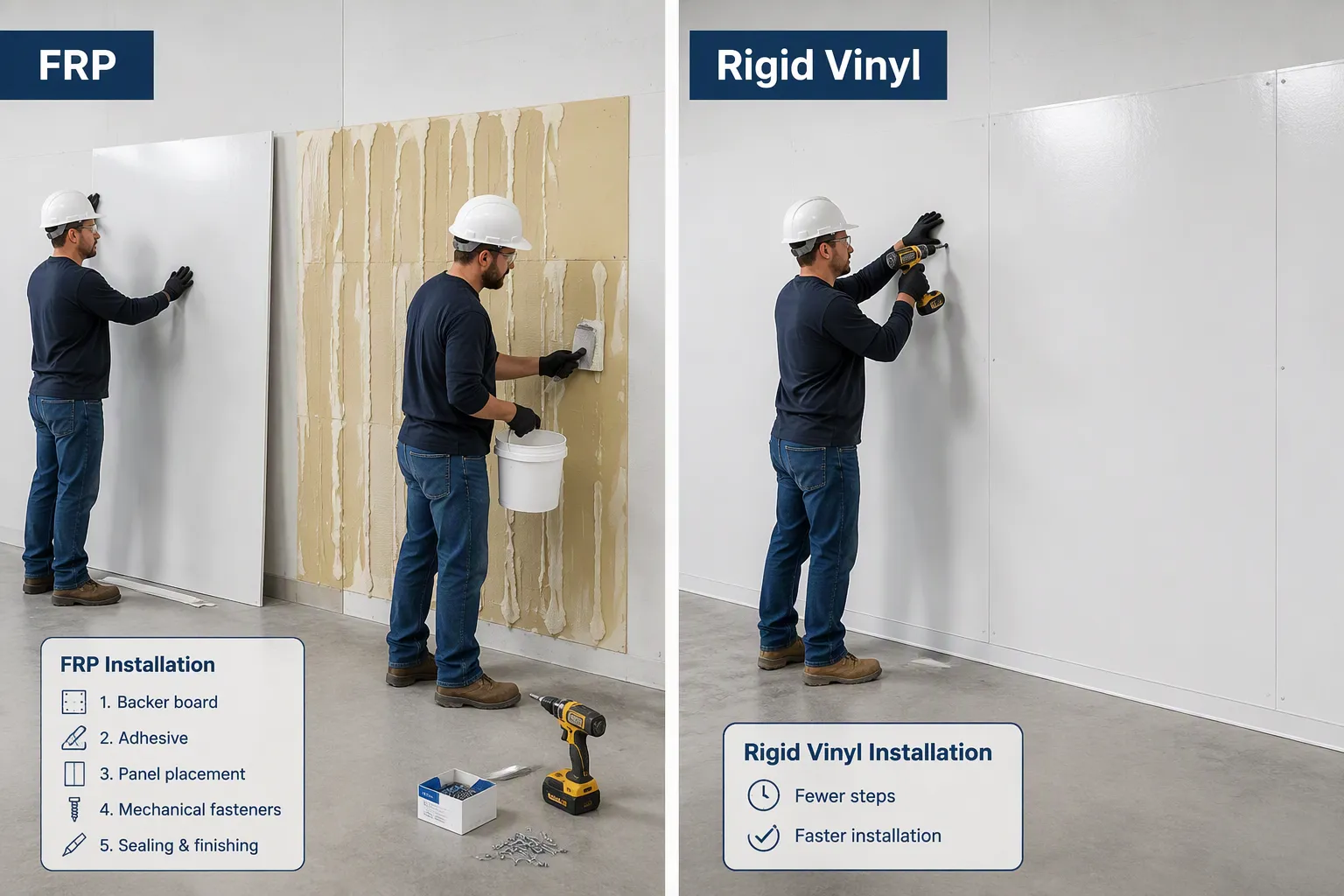
You need a solid backer material before you hang FRP. Plywood or OSB serves as that substrate. This extra layer adds material cost and extends the installation timeline. You must fasten the backer board first, then apply adhesive, then position each panel. The process requires skilled installers who understand proper adhesion and seam sealing.
The labor burden grows with this multi-layer approach. Adhesive curing time delays project completion. You need additional fasteners to secure both the backer and the panels. These factors drive up total installation cost significantly compared to simpler systems. A crew of two or more typically handles the job.
Rigid vinyl panels skip the backer board entirely. You install them directly onto your existing wall surface. This single-layer approach cuts material costs and reduces labor hours. One installer can often complete the job alone.
The installation process moves quickly. You position each panel, secure it, and move to the next. No adhesive curing delays your schedule. No additional fasteners for backer material. This streamlined method saves both time and money on your project.
PinGer supplies both panel types. Our team can advise you on labor-saving options for your specific facility. We help you weigh the trade-offs between these systems. Whether you compare rigid sheet vs FRP or fiberglass vs PVC wall protection, proper installation planning matters. For FRP alternatives for hospitals and similar facilities, rigid vinyl often wins on installation speed. When you evaluate FRP vs vinyl wall panels, consider your crew size and timeline. PinGer guides you toward the right choice.
Hygiene drives material selection in food processing plants, commercial kitchens, and healthcare facilities. The wall panel acts as a compliance surface in these settings. You need a surface that resists soil, bacteria, and repeated chemical cleaning.
FRP panels arrive as individual sheets. Every joint, inside corner, and panel edge needs caulk or trim to form a moisture barrier. That caulking becomes the weak point.
Caulk shrinks, cracks, and separates within three to seven years in high-moisture environments.
Moisture then infiltrates behind the panel system.
Mold grows in the wall cavity, and bacteria accumulate at the seam edge.
Steam, grease, and daily wet cleaning stress caulked joints in commercial kitchens and food processing areas. This creates an ever-growing maintenance obligation for food safety compliance. Repeated chemical cleaning also causes surface crazing over time. Micro-abrasions make panels harder to clean and easier for bacteria to colonize. The surface no longer meets the smooth, cleanable standard required by health departments, FDA inspectors, and infection control protocols.
Rigid vinyl offers a non-porous surface. You sanitize it easily and maintain it with minimal effort. No caulked seams interrupt the surface, so residue has nowhere to collect. This advantage matters when you weigh FRP vs vinyl wall panels for FRP alternatives for hospitals. The same logic applies to rigid sheet vs FRP comparisons in food plants. When you evaluate fiberglass vs PVC wall protection, rigid vinyl wins on hygiene and cleaning speed.
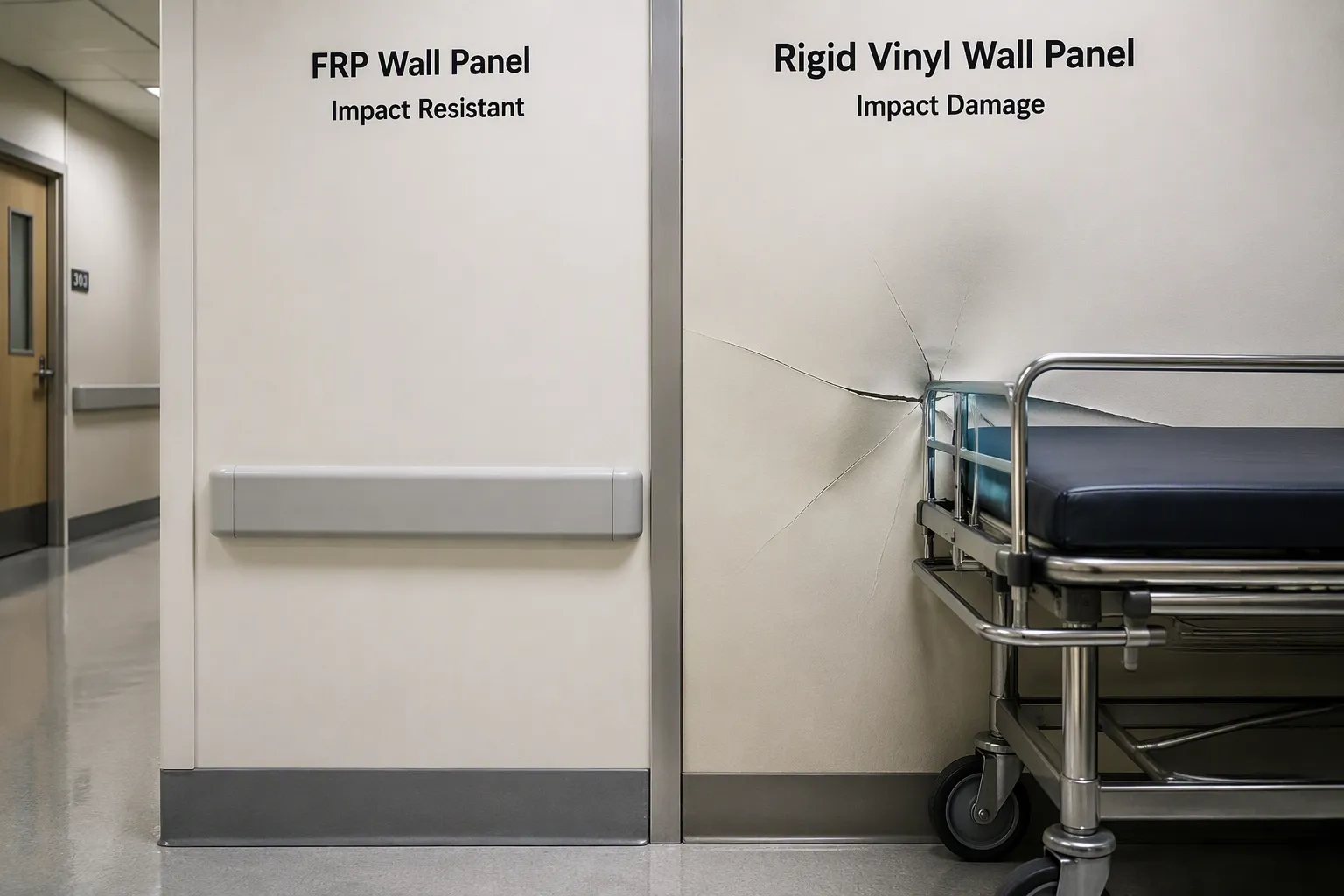
Impact resistance separates these two materials in high-traffic environments. You need to know how each panel handles carts, gurneys, and industrial equipment before you specify.
FRP panels resist shattering, scratching, and denting far better than standard vinyl. According to ASTM D256, standard 0.090-inch FRP panels carry an Izod impact resistance rating of 7.0 ft-lbs/in. This test standard measures the energy a notched specimen absorbs before it breaks. A higher value means the panel withstands more sudden force without cracking.
The construction explains this toughness. FRP composite panels have a high strength-to-weight ratio and resist scratching or denting. A non-porous gelcoat sits over a dense structural matrix. That combination delivers exceptional scratch and impact resilience. The textured surface resists scratches and abrasions for a lasting finish. FRP also never needs painting, which keeps your maintenance budget predictable.
These properties suit high-traffic areas. Carts, gurneys, and industrial equipment strike walls repeatedly in hospitals, warehouses, and manufacturing plants. FRP absorbs that punishment without visible wear. You get a surface that holds its appearance through years of hard use.
Rigid vinyl panels are solid, but they are less forgiving under extreme impact. Manufacturers engineer them to withstand collision impact without visible wear and tear. Repeated contact by rolling carts, wheelchairs, housekeeping equipment, or chairs will not cause damage. These panels also withstand scuffs and cuts. One manufacturer claims its product is practically wear-proof and stands up to repeated scuffing and abrasion.
That said, rigid vinyl lacks the rigidity of FRP. Standard rigid vinyl wall sheets scratch easily and expand significantly under thermal shifts. A direct, high-energy strike from heavy equipment can dent or crack the surface. The material performs well in everyday traffic, but it does not match FRP for extreme mechanical abuse.
Your decision hinges on the type of contact your walls face. Choose FRP for loading docks, industrial corridors, and areas with heavy cart traffic. Choose rigid vinyl for offices, patient rooms, and food preparation areas where hygiene matters more than impact tolerance. When you compare rigid sheet vs FRP for a busy hospital corridor, impact data should drive your choice. The same logic applies when you weigh fiberglass vs PVC wall protection for a warehouse aisle. PinGer stocks both panel types and can help you match impact performance to your actual traffic patterns.
Wet environments test wall panels relentlessly. You need to know how each material handles constant moisture, chemical exposure, and washdown demands before you specify.
FRP performs well in wet and corrosive environments. The gelcoat surface resists water penetration under normal conditions. Chemical exposure from cleaning agents, food acids, and industrial solvents does not degrade the surface quickly. These properties make FRP a common choice for areas with occasional moisture contact.
Moisture causes delamination when water works behind the panel through seams and fasteners. This condition separates the bond between the fiberglass surface and its backing. Once delamination begins, patching proves ineffective. You must replace the affected panels entirely. This risk grows in constant washdown areas where water finds every gap. Proper sealing during installation reduces this vulnerability, but the seams remain a long-term concern.
Rigid vinyl offers superior waterproof performance. The material resists moisture without delaminating. You get a non-porous, watertight finish that eliminates the risk of moisture seeping in. These panels are 100% moisture-resistant with tightly sealed surfaces that prevent water seepage.
Tongue-and-groove interlocking creates a virtually seamless barrier. High-pressure water cannot get behind the wall. The panels withstand high-pressure, hot-water washes required for sanitation. You find rigid vinyl in constant washdown environments such as car washes, dairy facilities, food processing plants, garages, and stables. When you weigh FRP vs vinyl wall panels for these settings, rigid vinyl wins on moisture protection. The same logic applies to FRP alternatives for hospitals where frequent sanitization is routine. For any rigid sheet vs FRP comparison in wet areas, waterproof performance should drive your decision. The same holds when you evaluate fiberglass vs PVC wall protection for chemical exposure. PinGer can help you match the right panel to your washdown schedule and chemical profile.
Fire codes protect building occupants. Your wall panels must meet the ratings your local authority requires. Both FRP and rigid vinyl undergo testing under ASTM E84, the standard test method for surface burning characteristics of building materials. This test measures flame spread and smoke developed as fire exposure occurs.
FRP manufacturers offer formulations that meet Class A or Class B flame spread classifications under ASTM E84. The specific rating depends on the resin system, the fiberglass content, and the panel thickness. A standard FRP panel may carry a different rating than a fire-rated variant from the same supplier. You must verify the exact rating for the product you specify.
Smoke development matters as much as flame spread. Healthcare facilities and assembly occupancies often impose stricter smoke limits. When you weigh FRP vs vinyl wall panels for a hospital corridor, the smoke developed index can eliminate one option entirely. The same logic applies to FRP alternatives for hospitals where patient egress routes demand low smoke output.
Rigid vinyl panels also carry ASTM E84 ratings. PVC naturally resists ignition, and manufacturers compound the material to meet specific flame spread and smoke targets. The rating varies by formulation, thickness, and the presence of fire-retardant additives. You cannot assume every rigid vinyl panel performs identically.
Code requirements vary by facility type and local jurisdiction. A food processing plant may face different rules than a school or a high-rise office. Your local building official holds final authority over what you can install. Confirm the ratings with PinGer before you specify. Our team can provide documentation for both rigid sheet vs FRP and fiberglass vs PVC wall protection comparisons.
FRP panels carry a lower per-sheet price than rigid vinyl panels. That number alone can make the material seem more affordable when you first compare quotes. But the installed cost tells a different story. You must add a backer board to the system before you begin. You must purchase adhesive and additional fasteners. You need a larger crew to handle the multi-step process. You wait for adhesive to cure before you can use the space. These hidden costs push the total installation expense higher than the material price suggests.
Rigid vinyl panels skip the substrate layer entirely. You mount them directly onto your wall with no backer board. One installer completes the job faster. No adhesive curing delays your schedule. While the panel price per square foot may exceed the alternative, the total project cost often comes in lower. The savings from labor, materials, and reduced downtime offset the higher material price. You get a finished wall sooner and with less disruption to your daily operations.
Long-term costs separate these two materials even further. The panel system often seen as the budget option demands ongoing maintenance that adds up over time. The seams require regular inspection and resealing. The surface develops micro-cracks that trap bacteria and dirt. Repeated chemical cleaning causes yellowing or discoloration. These maintenance burdens drive up your yearly operating expenses significantly. Replacement comes sooner, and the combined upkeep costs can eventually exceed the initial installation cost.
Rigid vinyl panels deliver a fundamentally different lifecycle profile. Their non-porous surface resists mold, mildew, and bacteria. Cleaning requires only a wipe-down with mild detergent. No sealing, painting, or refinishing enters your maintenance schedule. The panels resist yellowing and maintain their appearance through years of chemical cleaning exposure. Manufacturers guarantee these panels to last four times longer than FRP in comparable environments.
The cost comparison across factors tells a clear story.
|
Cost Factor |
Fiberglass Panels |
Rigid Vinyl Panels |
|---|---|---|
|
Cleaning and maintenance |
Time-consuming and costly; requires regular resealing, patch repairs, and repainting |
No painting, sealing, or refinishing needed; a simple wipe-down with mild detergent suffices |
|
Replacement frequency |
Frequent replacement; upkeep costs can exceed initial installation cost |
Longer lifespan; fewer replacements needed |
|
Lifecycle cost outcome |
Higher long-term cost due to ongoing upkeep and eventual replacement |
Lower lifecycle costs; a cost-effective long-term solution |
|
Lifespan |
Baseline |
Guaranteed to last 4x longer than the alternative |
In commercial kitchens, the gap widens considerably. PVC panels outperform the alternative on both total cost and hygiene over time. The combination of faster installation, lower maintenance requirements, and extended lifespan makes rigid vinyl the economically smarter choice for facilities that prioritize cleanliness and budget discipline.
Aesthetics influence material selection more than many facility managers admit. You need panels that complement your environment while meeting performance standards. Both materials offer distinct visual possibilities.
FRP panels give you substantial design flexibility. Manufacturers produce them in multiple textures and colors, giving designers flexibility when planning modular offices, guard shacks, and similar spaces. Color selection spans thousands of options. You can match corporate branding or institutional color schemes precisely.
The customization extends beyond solid colors. You can tailor every visual element in high resolution. Logos and images embed directly into the panel surface. Natural materials such as wood and stone reproduce faithfully through printing technology. FiberLite FRP panels offer a wide range of color choices on either textured or smooth surfaces. This versatility enhances design flexibility for modular offices, guard shacks, and similar spaces. When you evaluate FRP vs vinyl wall panels for a lobby or patient intake area, the ability to embed branding or match existing finishes often tips the scale toward FRP.
Rigid vinyl panels excel at replicating premium materials. High-definition printing reproduces the subtle veining of Calacatta marble, the warm grain of white oak, and the industrial texture of poured concrete. Larger panel sizes allow patterns to flow uninterrupted, creating a slab-like appearance.
Color varieties run broad. You choose from whites, neutrals, or bolder tones. Finishes range from soft matte to high-gloss. Solid-color options include Pure White, Light Gray, Deep Gray, Rose Pink, Soft Mocha, Forest Green, Mint Blue, Retro Blue, Crimson, and Black. You also select wood and plank looks in rigid or SPC panels. These options give you modern, clean surfaces suited to healthcare and food environments. When you search for FRP alternatives for hospitals that still look professional, rigid vinyl delivers. The same logic applies when you compare rigid sheet vs FRP for a reception area or fiberglass vs PVC wall protection for a retail space. PinGer carries a full range of finishes for both materials, so you match appearance to function without compromise.
Choose FRP for extreme impact and chemical exposure. Choose rigid vinyl for hygiene, easy cleaning, and faster installation. PinGer helps you match panel to environment.
|
Facility Type |
Recommended Panel |
|---|---|
|
Healthcare |
Rigid vinyl |
|
Food processing |
Rigid vinyl |
|
Wet areas |
Rigid vinyl |
|
High-traffic industrial |
FRP |
Request samples or consult a PinGer expert today.
Rigid vinyl usually costs less to install. It needs no backer board, no adhesive, and often just one installer. FRP requires a substrate and a larger crew.
Rigid vinyl handles constant washdown best. Its tongue-and-groove seal keeps water out. FRP works in wet areas, but compromised edges can delaminate over time.
Both carry ASTM E84 ratings, but formulations vary by product. Your local building official sets the final requirement. Confirm the exact rating with PinGer before you specify.


 English
 français
 Deutsch
 русский
 italiano
 español
 português
 العربية
 한국의
한국의 Tiếng việt
 Indonesia
 中文
中文


 IPv6 네트워크 지원